

Fibromyalgia Diagnosis and Treatment references
|
Fibromyalgia (fi-bro-my-AL-ja) syndrome (FMS) produces chronic body-wide pain, which migrates and can be felt from head to toe.
Fibromyalgia deconstructed:
1. ‘Fibro’ refers to fibrous tissues, like tendons, ligaments and fascia.
2. ‘Myo’ refers to muscle.
3. ‘Algia’ means pain. An analgesic is a pain killer.
Hence, the term fibromyalgia refers to pain in muscles and fibrous tissues.
Fibromyalgia is included in the World Health Organsation's International Classification of Diseases, in the Tenth Revision of the International Statistical Classification of Diseases and Related Health Problems (ICD-10) published by WHO in 1992 as follows:
M79 Other soft tissue disorders, not elsewhere classified
M79.0 Rheumatism, unspecified
Fibromyalgia
Fibrositis

Dr. Jon Russell, Dr. Ellen Thompson, and FM-CFS Canada's John Ernst
| |
Click here for audio recordings of Dr. Jon Russell, considered one of the world's leading FM experts.
|
Incidence Rate:
Careful research in London Ontario in 1997 suggests the adult Fibromyalgia population percentage was a minimum 3.3%. Since then, it seems there are more cases of children being reported, which the study did not include. The higher estimate for Canada would be about 5%, but there is little research, and a need for more. Is the rate increasing, decreasing? Estimates provided by US & UK organisations sugggest the incidence rate may be conservatively 3.5 - 5% of the total population. Canada has more than 1 million FM & CFS patients, as many as 1.5 million Canadians. A city with 1 million people will have between 33,000 and 50,000 people with this illness. It is the type of illness that affects the whole family, so the number of 'directly affected' people rises quickly.
Description:
Fibromyalgia is a chronic disorder characterized by widespread
musculoskeletal pain, fatigue, and multiple tender points. "Tender points"
refers to tenderness that occurs in precise, localized areas, particularly
in the neck, spine, shoulders, and hips. People with this syndrome may also
experience sleep disturbances, morning stiffness, irritable bowel syndrome,
anxiety, cognitive problems ("foggy mind")and other symptoms.
The term"chronic neuroendoimmunological dysfunction" for FM and CFS has been
recommended by experts but not generally accepted as yet.
In order to be clinically diagnosed with FM, an individual must have:
1. Widespread pain in all four quadrants of their body for a minimum of 3 months; and
2. At least 11 of the 18 specified tender points clustered around the neck, shoulder, chest, hip, knee, and elbow regions. Over 75 other tender points have been found to exist but are not used for diagnostic purposes.
The selection criteria were shown to be 88% accurate in their ability to identify patients with FM. Other common health problems include a sleep disorder, irritable bowel and bladder, cognitive and memory impairment, muscle spasms, headaches, nerve irritation, reduced coordination, multiple chemical sensitivity (odors, noise, bright lights, medications, foods), and decreased physical endurance.
Researchers have noted a significant overlap between FM and CFS. A majority of these patients meet both diagnostic criteria for FM and CFS. Dr. Don Goldberg, chief of rheumatology at Newton-Wellesley Hospital in Massachusetts, indicated recently at a patient conference that the clinical overlap between CFS and FM is so great that a patient's diagnosis may depend on what the patient tells his/her doctor, on the patient's perception of the illness, on the apparent trigger for the onset, and on the type of doctor the patient sees. Dr. Goldberg has noted numerous similarities between CFS and FM in studies of physiology, sleep abnormalities, cognitive difficulties, psychiatric co-morbidity, blood flow to the brain, growth hormones, the HPA axis, stress, and much more.
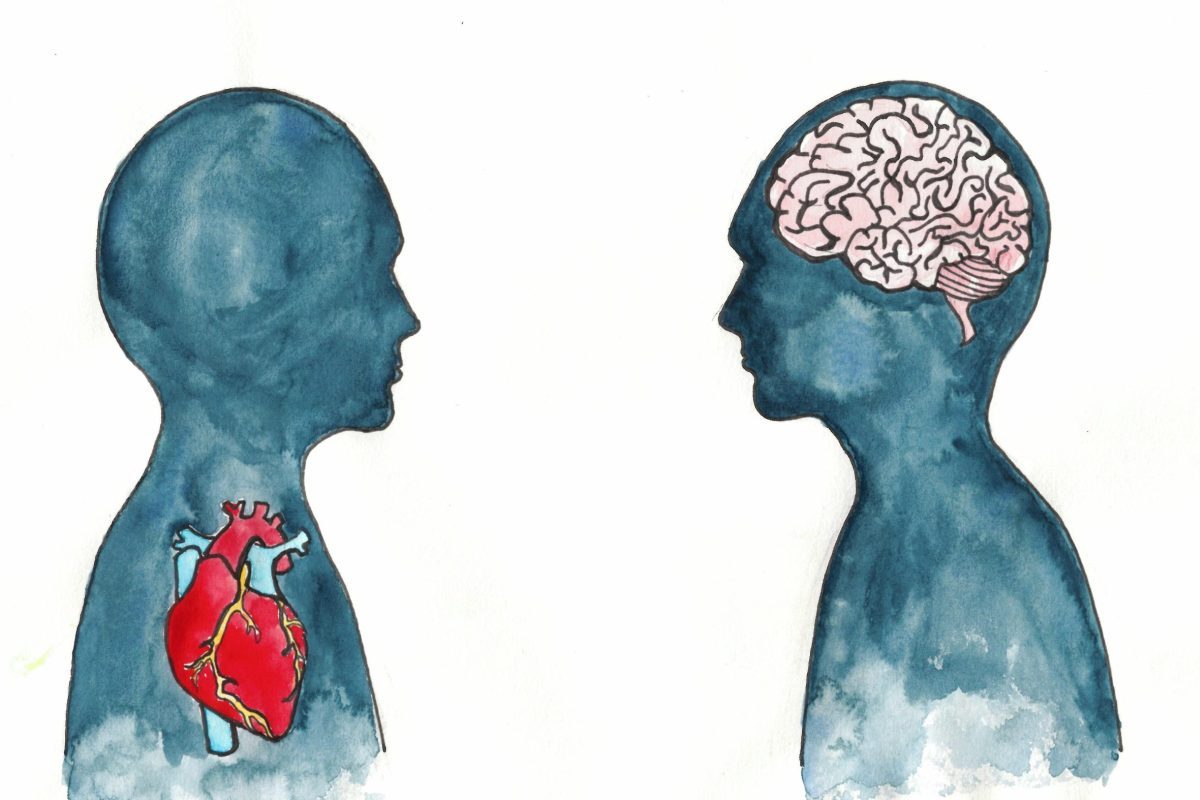
Move your mouse over the image. Image donated by 'Men with Fibro' www.menwithfibro.com
Onset of FM:
These illnesses are different experiences for different people. Sometimes the illness hits quick and hard, in other cases it comes on slowly. There is no definitive test yet for the illness, so at best the diagnosis by process of elimination. Because of this and because the world has only really begun to take note of the illnesses in the past decade, many physicians haven't learned much about them, nor stayed up to date. This means the onset of the illness can be a trial in itself. Consider awaking one day in an otherwise good life to have the symptoms of a bad flu - aches, fatigue, depressed immune system, and a cognitive fog. You expect it to go away soon and may take a few days off work. Welcome to a chronic illness.
This isn't going away. After a week you seek advice and for most patients this begins a process where many of the physicians you consult will tell you it's in your head, there's nothing wrong with you. What's the take-home message for your employer and family? That's when relationships with employers and family often begin to fall apart. This illness might be fair game for suspicion if only 10,000 had it, but 1,000,000 - 1,500,000? Something very real is going on. Unfortunately this situation has led to most patients being misdiagnosed and given the wrong medication. A definitive test would change this situation, but more compassion is needed, and more education. Fighting loss of employment, the break-up of relationships, and facing disbelief from physicians is not the recommended situation for coping with FM & CFS.
The onset of the illness is traumatic and can be depressing, which doesn't help. Imagine your life suddenly changing like this.
The London Fibromyalgia Epidemiology Study: The Prevalence of Fibromyalgia (FMS) in
London, Ontario. K. White, M. Speechley, M. Harth,T. Ostbve UWO, London, Ontario
N6A 5A5
Objective: To estimate the prevalence of FMS among non institutionalized adult males (M) and females (F) in London.
Methods: A random-digit dialing telephone survey was undertaken to screen for chronic
widespread pain and fatigue over the previous 3 months, randomly interviewing 1 adult per
household, using a prevalidated screening instrument. Subjects with chronic widespread
pain were examined by a rheumatologist at University Hospital to confirm or exclude FMS
using the 1990 A.C.R. criteria. Results: We contacted 4674 eligible adults; 3395 (72.6%)
agreed to be interviewed. Recalling the previous 3 months, 34.8% reported some
musculoskeletal pain lasting at least I week, 6.5% chronic widespread pain, 54.5% frequent
fatigue, and 21.5% frequent fatigue that significantly limited activities. Of 221 with
widespread chronic pain, 176 (79.6%) agreed to be examined. FMS was confirmed in 100 (86
F), who had a mean age of 47.8 years (C.I. 45.0, 50.6). The age-adjusted overall point
prevalence of FMS was 4.2% in F and 1.1% In M, for a F:M prevalence ratio of 3.8:1. In
both sexes, prevalence steadily increased with age until age 64, peaking at 8.9% in F age
50-64, and at 2.1% in M age 50-64. In both sexes, prevalence decreased sharply after age
64; no M cases over age 64 were identified.
Key Words In Fibromyalgia
From the National Institute of Arthritis and Musculoskeletal and Skin Diseases
Adrenal glands: A pair of endocrine glands located on the surface of the kidneys. The adrenal glands produce corticosteroid hormones such as cortisol, aldosterone, and the reproductive hormones.
Arthritis: Literally means joint inflammation, but is often used to indicate a group of more than 100 rheumatic diseases. These diseases affect not only the joints but also other connective tissues of the body, including important supporting structures, such as muscles, tendons, and ligaments, as well as the protective covering of internal organs.
Analgesic: A medication or treatment that relieves pain.
Connective tissue: The supporting framework of the body and its internal organs.
Chronic disease: An illness that lasts for a long time, often a lifetime.
Cortisol: A hormone produced by the adrenal cortex, important for normal carbohydrate metabolism and for a healthy response to stress.
Fibrous capsule: A tough wrapping of tendons and ligaments that surrounds the joint.
Fibromyalgia: A chronic syndrome that causes pain and stiffness throughout the connective tissues that support and move the bones and joints. Pain and localized tender points occur in the muscles, particularly those that support the neck, spine, shoulders, and hip. The disorder includes widespread pain, fatigue, and sleep disturbances.
Inflammation: A characteristic reaction of tissues to injury or disease. It is marked by four signs: swelling, redness, heat, and pain. Inflammation is not a symptom of fibromyalgia.
Joint: A junction where two bones meet. Most joints are composed of cartilage, joint space, fibrous capsule, synovium, and ligaments.
Ligaments: Bands of cordlike tissue that connect bone to bone.
Muscle: A structure composed of bundles of specialized cells that, when stimulated by nerve impulses, contract and produce movement.
Nonsteroidal anti-inflammatory drugs (NSAIDs): A group of drugs, such as aspirin and aspirin-like drugs, used to reduce inflammation that causes joint pain, stiffness, and swelling.
Pituitary gland: A pea-sized gland attached beneath the hypothalamus at the base of the skull that secretes many hormones essential to bodily functioning. The secretion of pituitary hormones is regulated by chemicals produced in the hypothalamus.
Sleep disorder: A disorder in which a person has difficulty achieving restful, restorative sleep. In addition to other symptoms, people with fibromyalgia usually have a sleep disorder.
Tender points: Specific places on the body where a person with fibromyalgia feels pain in response to slight pressure.
Tendons: Fibrous cords that connect muscle to bone.
From the National Institute of Arthritis and Musculoskeletal and Skin Diseases
|